
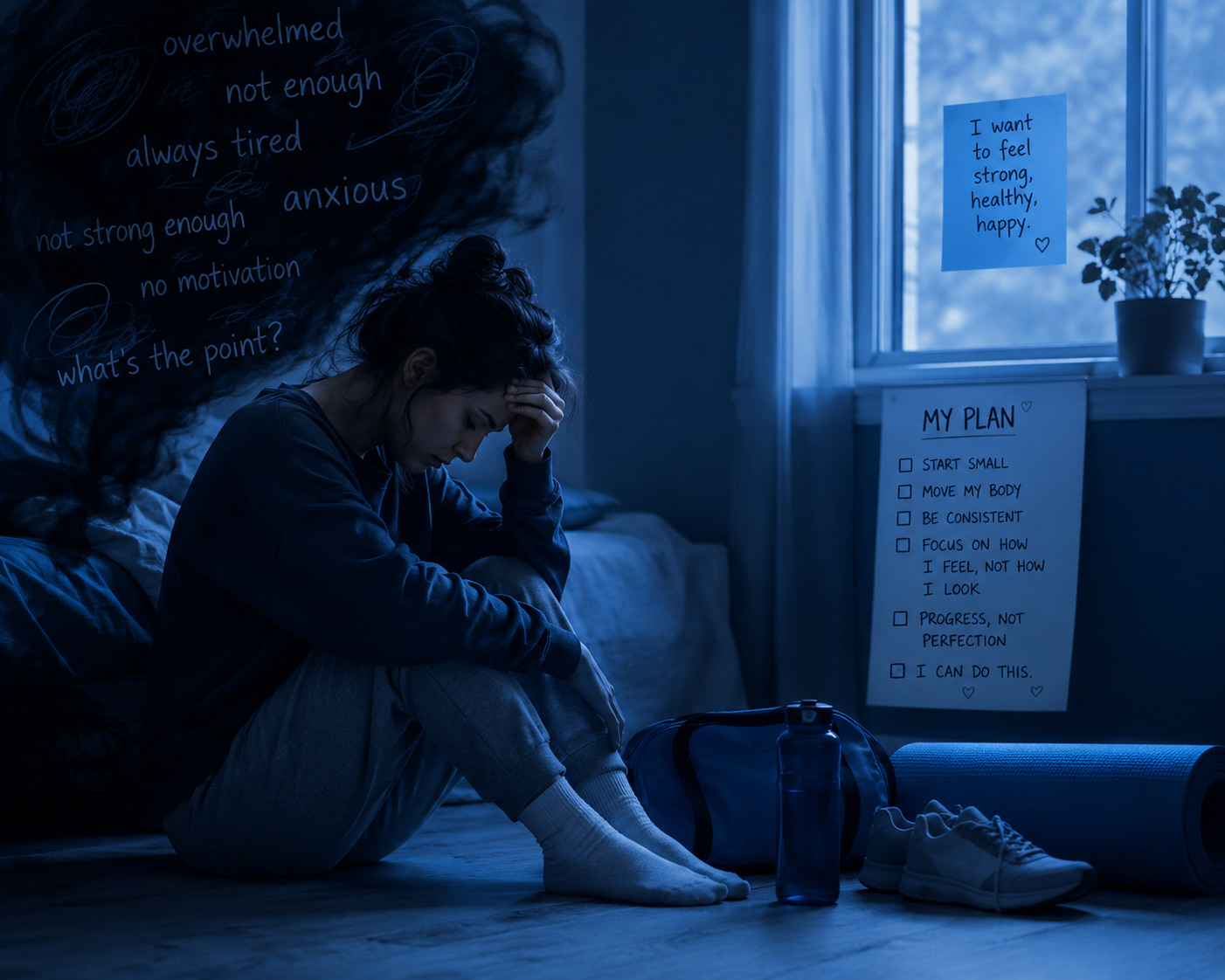

When most people think about fitness, they often think about weight loss, building muscle, or improving endurance. But movement is so much more than that.
At Miles with Misty Coaching, I believe fitness should support the whole person — body, mind, confidence, energy, and daily life. Exercise is not just about pushing harder. It is about learning how to move in a way that feels realistic, supportive, and sustainable.
Mental health challenges like depression, anxiety, chronic stress, low motivation, poor sleep, and reduced daily functioning can make exercise feel overwhelming. If you have ever thought, “I know movement would help, but I just can’t get started,” you are not alone. It means you may need a different approach.
Why Mental Health and Physical Activity Are Connected
Overall wellness includes both physical and mental health. Mental health challenges can affect the way you think, feel, sleep, eat, move, make decisions, and manage your daily responsibilities.
For many people, depression and anxiety can make even simple tasks feel heavy. Getting dressed, going outside, showing up for a workout, or following a structured routine can feel like too much.
At the same time, low physical activity can also make mental health symptoms worse. When we stop moving, we may experience:
| Low Physical Activity May Contribute To | How It Can Feel Day to Day |
|---|---|
| Poor sleep | Feeling tired, foggy, or unrested |
| Low energy | Struggling to start or finish tasks |
| Increased stress | Feeling tense, overwhelmed, or irritable |
| Low confidence | Feeling disconnected from your body |
| Reduced motivation | Feeling stuck or defeated |
This can become a difficult cycle. Poor mental health can reduce movement, and reduced movement can make mental health symptoms harder to manage.
The good news? You do not have to start with intense workouts to begin breaking that cycle.
Exercise Is a Support Tool — Not a Replacement for Care
Before we go further, please note: exercise is not a replacement for therapy, medication, crisis care, or medical treatment when those are needed.
However, physical activity can be a powerful support tool.
Regular movement may help reduce symptoms of stress, anxiety, and depression. It can also support better sleep, clearer thinking, improved confidence, and better day-to-day functioning.
The goal is progress that feels possible.
How Exercise Can Help Depression, Anxiety, and Stress
Movement affects the body and brain in several ways. When you move, your body can release chemicals that influence mood, motivation, stress response, and emotional regulation.
Exercise may help support:
| Mental Health Benefit | How Movement May Help |
|---|---|
| Mood | Movement can support chemicals connected to pleasure and motivation |
| Anxiety | Gentle activity can help release tension and regulate stress |
| Sleep | Consistent movement can support better sleep patterns |
| Confidence | Small wins help rebuild trust in your body |
| Energy | Regular activity can reduce feelings of sluggishness over time |
| Stress relief | Movement gives the body a healthy outlet |
But here is the important part: more is not always better.
For someone dealing with anxiety, depression, trauma, poor sleep, or chronic stress, a workout that is too intense may feel discouraging or even unsafe. That is why a gentle, personalized, and realistic plan matters.
Why Starting Small Works Best
One of the biggest mistakes people make is trying to restart fitness with an all-or-nothing mindset.
They say:
“I need to work out five days a week.”
“I need to do 45 minutes every session.”
“I need to push through.”
“I need to stop making excuses.”
But when your mental health is already strained, that kind of pressure can backfire.
Instead, I coach clients to start with small, repeatable wins.
That might look like:
| Instead of This | Try This |
|---|---|
| A 45-minute workout | A 5- to 10-minute walk |
| A high-intensity class | Gentle mobility or stretching |
| A strict schedule | A flexible movement plan |
| Training to exhaustion | Training to feel successful |
| Focusing only on weight loss | Celebrating energy, sleep, and consistency |
Small steps count. In fact, they are often the reason people finally become consistent.
Beginner-Friendly Exercises for Mental Wellness
If you are struggling with motivation, anxiety, low mood, or stress, your starting point should feel manageable. Here are a few gentle options I often recommend.
1. Walking or Light Cardio
Walking is one of the best places to start because it is simple, low-impact, and easy to adjust.
You can walk outside, indoors, on a treadmill, around your home, or with someone you trust.
A great starting goal is:
5 to 10 minutes at a comfortable pace.
You should be able to hold a conversation while walking. If 10 minutes feels like too much, split it into two 5-minute walks.
This is not “too easy.” This is building the habit.
2. Sit-to-Stands
Sit-to-stands are a great beginner strength exercise because they build strength for real life. They help strengthen your legs, hips, and core without needing fancy equipment.
All you need is a sturdy chair or bench.
Try:
1 to 2 sets of 6 to 8 repetitions
Focus on standing tall, pressing through your feet, and resting when needed.
This movement can later progress into squats, but the first goal is confidence and control.
3. Gentle Stretching or Mobility
Stretching, yoga-inspired movement, and breath-focused mobility can be helpful for stress, anxiety, and sleep support.
Gentle options include:
| Movement | Why It Helps |
|---|---|
| Cat-cow | Encourages spinal mobility and calm breathing |
| Child’s pose | Supports relaxation and grounding |
| Seated forward fold | Releases tension gently |
| Gentle spinal rotations | Helps reduce stiffness |
| Legs-up-the-wall | Encourages relaxation and recovery |
You do not need to force deep stretches. You do not need to close your eyes. You do not need to do anything that makes you uncomfortable.
The goal is to help your nervous system feel safe.
What If Anxiety Makes Exercise Feel Scary?
For some people with anxiety, exercise can feel uncomfortable because the body’s normal workout responses can mimic anxiety symptoms.
During exercise, your heart rate may increase. Your breathing may get faster. You may sweat. Your body may feel warm.
Those are normal physical responses to movement, but for someone who experiences panic or anxiety, they can feel alarming.
That is why early workouts should be predictable, calm, and low-pressure.
A supportive fitness plan may include:
| Anxiety-Friendly Coaching Strategy | Why It Helps |
|---|---|
| Clear explanation before each movement | Reduces uncertainty |
| Low-intensity exercise | Builds confidence gradually |
| Longer rest breaks | Helps the body feel safe |
| Simple movement choices | Prevents overwhelm |
| Flexible pacing | Gives the client control |
Fitness should not feel like punishment. It should feel like support.
What If Depression Makes Motivation Difficult?
Depression can affect energy, sleep, focus, appetite, and interest in activities. This means someone may genuinely want to exercise and still feel unable to start.
That is why motivation cannot be the only strategy.
Instead, I recommend creating “minimum movement options.”
For example:
| Full Workout Plan | Minimum Option |
|---|---|
| 30-minute walk | 5-minute walk |
| Full strength workout | 1 round of 3 exercises |
| Yoga session | 3 gentle stretches |
| Gym workout | Walk around the block |
| Scheduled session | Light movement at home |
This keeps the habit alive without shame.
Some days, the win is not crushing a workout.
Some days, the win is simply showing up.
Progress Is More Than the Scale
When using exercise to support mental health, progress should not only be measured by weight, inches, calories, or performance.
Progress can also look like:
| Signs of Progress | Why It Matters |
|---|---|
| Sleeping better | Recovery and mood may improve |
| Feeling more energized | Daily tasks may feel easier |
| Showing up more often | Consistency is building |
| Feeling less tense | Stress may be improving |
| Having more confidence | Self-trust is growing |
| Feeling proud after movement | Positive reinforcement matters |
At Miles with Misty Coaching, we celebrate those wins.
Because they matter.
A Gentle Weekly Movement Plan for Mental Health Support
Here is a simple beginner-friendly plan that can support consistency without feeling overwhelming.
| Day | Movement Goal |
|---|---|
| Monday | 5- to 10-minute walk |
| Tuesday | Gentle stretching for 5 minutes |
| Wednesday | Sit-to-stands: 1 to 2 sets of 6 to 8 reps |
| Thursday | Rest or light mobility |
| Friday | 5- to 10-minute walk |
| Saturday | Stretching, yoga, or breath-focused movement |
| Sunday | Rest, reflection, or an easy walk |
This can be adjusted based on energy, sleep, stress, and daily responsibilities.
The best plan is the one you can actually repeat.
Reminder:
If your mental health has made fitness difficult, please know this:
You are not failing.
You may simply need a kinder starting point.
Movement can be a powerful way to reconnect with your body, rebuild confidence, improve sleep, reduce stress, and support your overall wellness. But it should be done with patience, flexibility, and compassion.
You do not have to do everything today.
Start small.
Move gently.
Celebrate often.
Keep going.
Ready to Start Moving in a Way That Supports Your Mind and Body?
At Miles with Misty Coaching, I help clients build realistic fitness routines that support strength, confidence, consistency, and whole-person wellness.
Whether you are starting over, managing stress, struggling with motivation, or trying to rebuild trust in your body, you deserve a plan that meets you where you are.
Your first step does not have to be big. It just has to be yours.
Always in your corner,
Coach Misty
Leave a Reply